|
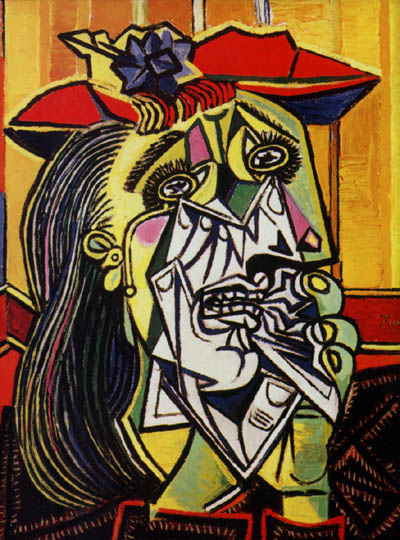 |
Weeping Woman, 1937 |
When a strong emotion is felt, it is often revealed in terms of physical transformation, reflected in phrases like: ’her eyes jumped out of her head’, a ‘screwed up mouth’, a face ‘streaming with tears’. These emotions Picasso expressed in his paintings, and during the war his portraits of Dora Maar would symbolize the general human grief. |
|

